BSEC-URTA Calls for Action on Border Delays, Driver Mobility and Digital Transport
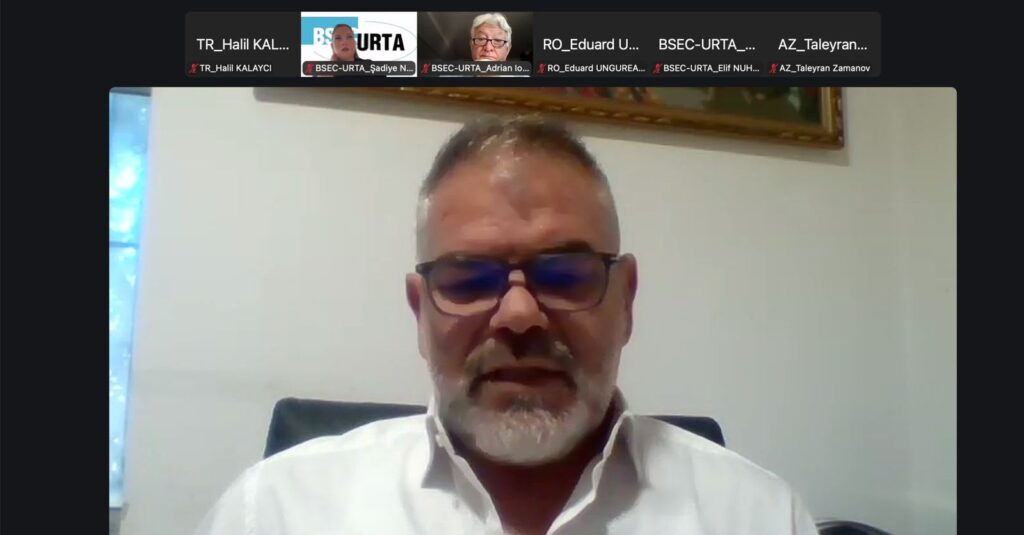
Please hear the cry of the drivers who stood by you during humanity’s most difficult times. You will need them again.”
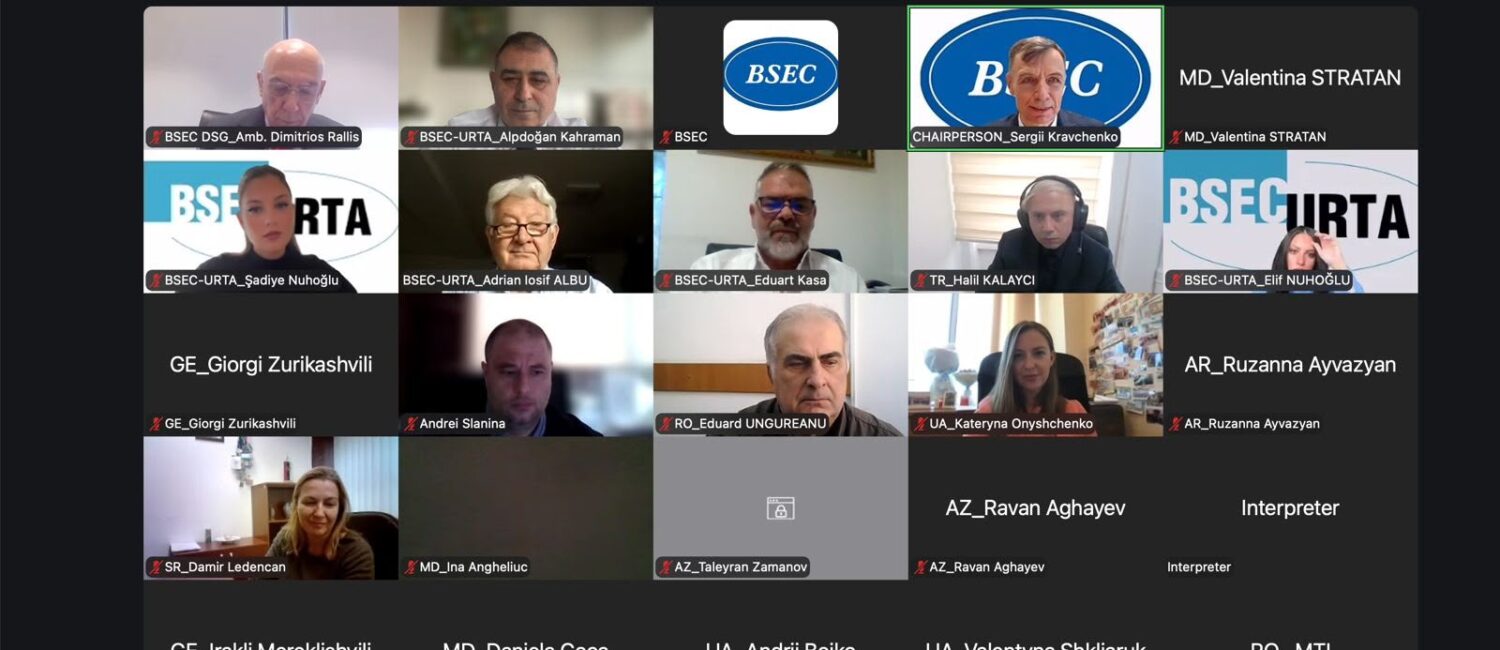
With this appeal, BSEC-URTA President Eduart Kasa highlighted the human and economic consequences of growing obstacles to international road transport at the BSEC Steering Committee on Facilitation of Road Transport of Goods, held on 5 November 2026.
The BSEC-URTA delegation comprised President Eduart Kasa, Senior Adviser Adrian Albu, experts Elif Nuhoğlu and Şadiye Nuhoğlu, and Deputy Secretary General Alpdoğan Kahraman. Their contributions focused on professional drivers’ working conditions, border performance and preparations for digital freight transport.
Kasa drew attention to excessive border waiting times and the operational difficulties associated with the EU’s Entry/Exit System (EES). He warned that obstacles preventing drivers from carrying out their profession could damage transport capacity, supply chains and the wider economy.
His intervention also addressed the future of the profession: protecting drivers’ working conditions today is essential to ensuring that younger generations continue to choose a career on which international trade depends.
BSEC-URTA’s message was clear: professional drivers need workable conditions, predictable border procedures and recognition of their essential contribution to society.
A 90-Day Pilot for Better Border Performance
Building on the proposal previously presented to the BSEC Working Group on Customs Matters, Alpdoğan Kahraman invited transport ministries to support a 90-day pilot project at a selected BSEC border crossing.
He emphasised that customs authorities should have a clear operational coordination role at the border, supported by the active participation of transport ministries and other competent institutions. Delegating responsibilities to customs must come with shared institutional support for improving the entire border operation.
The proposed pilot could examine either a successful crossing, documenting practices suitable for replication, or a crossing facing persistent difficulties, bringing the relevant authorities together to identify bottlenecks and test improvements.
Improving border crossings requires joint responsibility, sustained monitoring and practical action on the ground. BSEC-URTA called on transport ministries across the region to contribute their expertise and support this initiative.
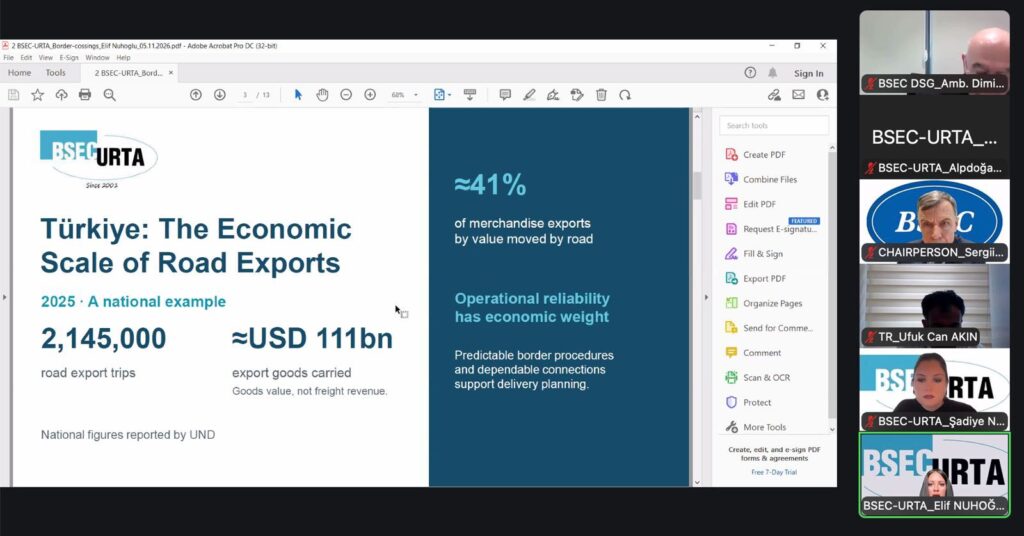
Border Data Shows Both Progress and Persistent Bottlenecks
Elif Nuhoğlu presented data on Türkiye’s border crossings, illustrating both the potential for higher throughput and the cost of prolonged delays.
She highlighted daily truck departures reaching approximately 2,500 at the Türkiye–Iraq border, demonstrating the volumes that effective border operations can accommodate.
At the Türkiye–Bulgaria border, stronger coordination helped increase departures from a commonly accepted average of approximately 750 trucks to around 1,500 in one direction per day. This experience provided a concrete example of the improvements that cooperation can deliver.
By contrast, throughput of approximately 300 trucks per day in one direction at the İpsala–Kipi crossing between Türkiye and Greece remains a longstanding concern requiring attention.
Nuhoğlu also presented evidence of waiting times reaching 96 hours, underlining the need for transport ministries to address border performance as a priority for trade facilitation.
The figures demonstrate that persistent bottlenecks can be addressed when neighbouring authorities work towards shared operational objectives.
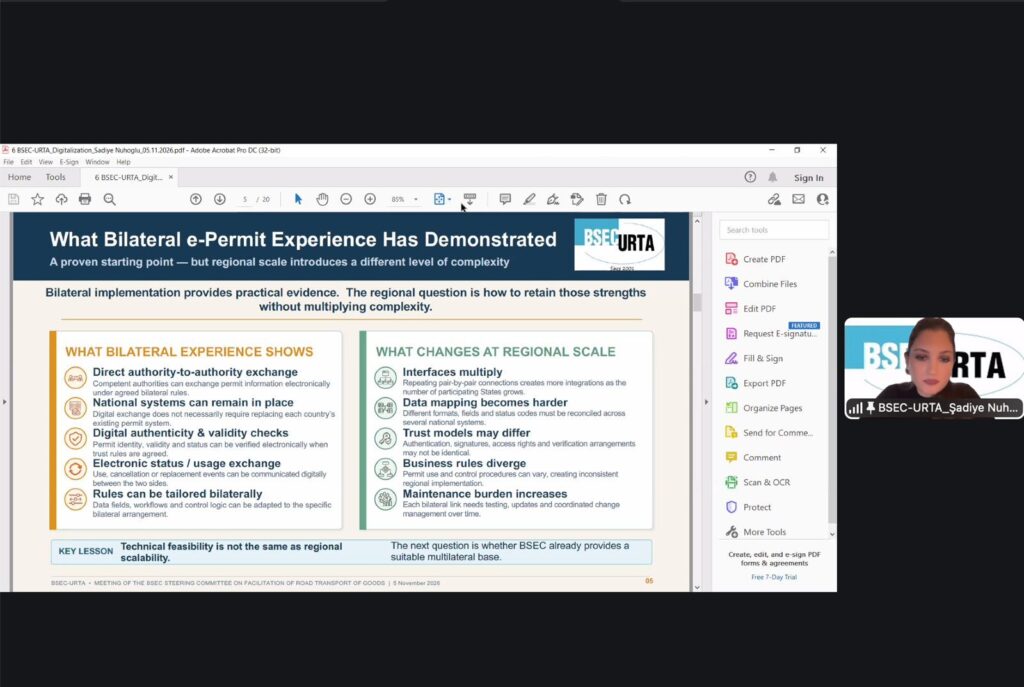
Digitalisation and Readiness for eFTI
Şadiye Nuhoğlu presented a practical overview of transport digitalisation, covering electronic transport permits (e-Permit), electronic consignment notes (e-CMR) and the EU’s electronic Freight Transport Information framework (eFTI).
Her presentation connected these developments into a broader discussion of readiness for paperless transport, highlighting the need for authorities and operators to prepare their systems and procedures.
A central question was whether the region is ready for 9 July 2027, when EU Member State authorities will be required to accept regulatory freight information submitted electronically through certified eFTI platforms. European Commission
Digitalisation must translate into simpler procedures and more efficient transport operations. Preparing for this transition requires cooperation across borders as well as coordination between public authorities and the transport industry.
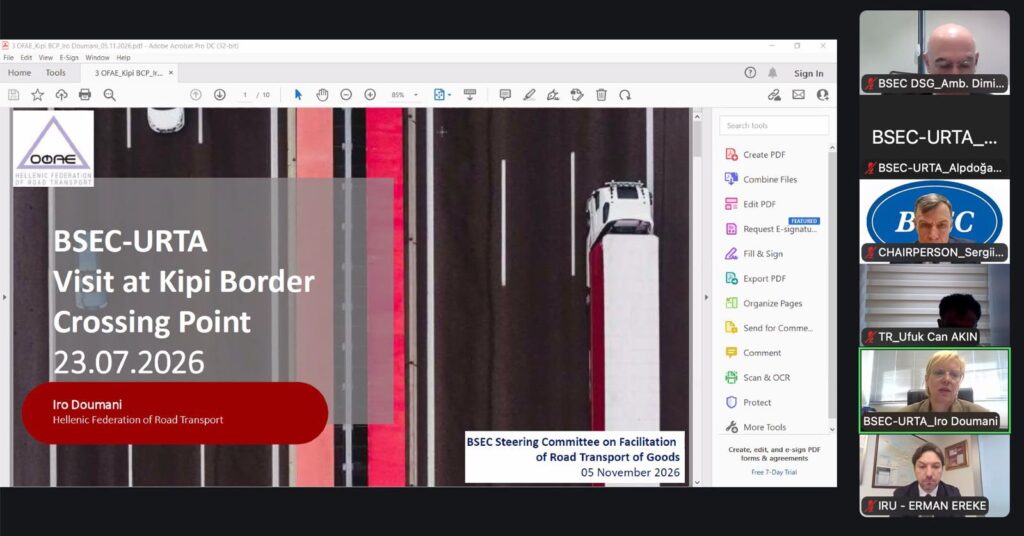
Kipi Border Performance Has Regional Consequences
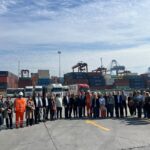
Iro Doumani, President of the IRU Goods Transport Council and a member of the wider BSEC-URTA community, presented findings from a visit to the Kipi border crossing.
Her intervention examined how throughput of approximately 300 trucks per day in one direction could be increased and how better border performance could strengthen Greece’s role as a major transit country in the BSEC region.
She stressed that limited capacity at Kipi has consequences beyond the crossing itself. Rather than relieving pressure elsewhere, inadequate throughput can divert traffic and increase waiting times at other border crossings.
Border capacity must therefore be considered across the transport network, with improvements benefiting both the transit country and the wider region.
BSEC-URTA thanks BSEC PERMIS and all participating representatives of transport ministries for their engagement and contributions. The Association looks forward to continued cooperation on practical measures to improve border performance, support professional drivers and advance transport digitalisation throughout the BSEC region.